
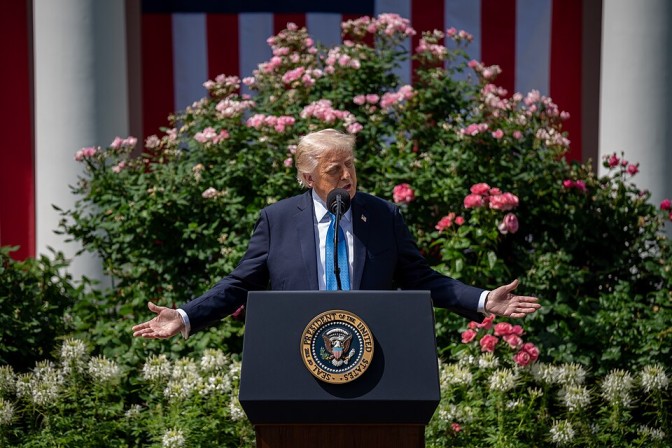
The ongoing negotiations between the United States and Iran aim to reach an agreement that could reduce ongoing tensions, though significant disagreements remain despite some signs of progress. President Donald Trump of the United States has fluctuated between issuing warnings of potential military action and showing optimism about achieving a diplomatic resolution, which has added to global market uncertainties. His recent comments hinting at a possible peace agreement have contributed to a decrease in oil prices and have somewhat alleviated investor worries.
Current discussions are reportedly centered on a preliminary memorandum of understanding. This memorandum would address immediate concerns, such as reopening the Strait of Hormuz, a vital channel for global energy shipments. However, more intricate issues, particularly those concerning Iran’s nuclear program, are expected to be reserved for future negotiation rounds. A significant point of contention remains economic relief for Iran, which seeks access to some of its frozen foreign assets before making substantial commitments. Meanwhile, the US prefers to tie any sanctions relief or financial incentives to verifiable progress under the agreement.
Nuclear restrictions also present a challenging issue in these negotiations. The US is advocating for stricter commitments from Iran concerning uranium enrichment and nuclear oversight. On the other hand, Iran favors broader terms that would defer detailed negotiations to later discussions. Despite these challenges, officials from both countries recognize that some progress has been made and believe that reaching a diplomatic resolution is still possible.
Analysts suggest that both the United States and Iran are under increasing pressure to avoid further military confrontations and to arrive at an agreement that could stabilize the region. As negotiations continue, regional security concerns, the flow of energy exports, and economic recovery remain critical issues. The goal is to establish a framework that could eventually lead to a more comprehensive agreement in the future, addressing these central concerns.