
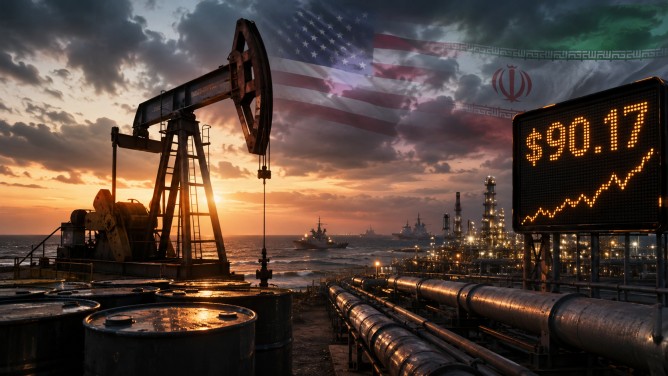
Tensions between the United States and Iran have caused a significant spike in oil prices, as the expiration of a two-month negotiation period without a peace deal has heightened fears of ongoing conflict and its potential impact on global energy supplies. Brent crude has surged past the $90 mark, reaching approximately $91.63 per barrel, marking its highest level since July 30. This price increase follows US President Donald Trump’s demand for Iran to surrender and his warning of possible escalation if diplomatic efforts do not succeed.
The strategic Strait of Hormuz has become a focal point of concern, as it serves as a vital artery for global oil shipments. The number of commercial vessels navigating this crucial route has dwindled, exacerbating worries about extended disruptions to oil supplies. Reports of an attack on a cargo ship transiting the strait have further fueled anxieties regarding the safety of maritime traffic in the area.
In response to the stalled negotiations, Iran has suggested it might adopt a more assertive military posture. This development has prompted investors to brace for longer-term disruptions in oil supply chains. Any sustained closure or limitation on traffic through the Strait of Hormuz could drive crude prices even higher, adding to the existing pressure on the market.
Analysts caution that the ongoing conflict in the Middle East, compounded by the continuing war in Ukraine, could lead to additional shocks in global energy markets. Such a scenario may result in even higher prices for oil and gas, exacerbating the already volatile economic landscape.