
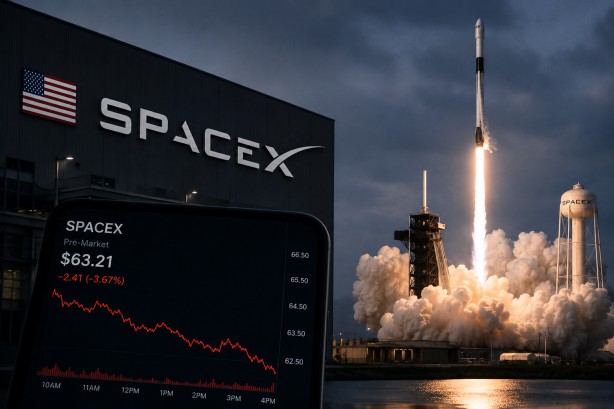
SpaceX is facing the possibility of increased selling activity as up to 911.5 million shares become eligible for trading. This development provides certain employees and early investors the chance to sell shares they acquired prior to the company’s record-breaking IPO. On Wednesday, the stock experienced a significant drop, declining nearly 14% to close at $108.27. This marks the second-largest single-day fall for the stock, leaving it approximately 20% below the $135 initial public offering price, only weeks after SpaceX made its debut in the public market.
The company had initially offered a limited portion of its total shares for public trading, which created a scarcity and, in turn, fueled strong demand following the IPO. The forthcoming release of shares is expected to considerably increase the number available to investors, which could contribute to short-term fluctuations in the stock’s value. However, it’s important to note that the release of these shares doesn’t automatically mean all 911.5 million will be sold immediately. Employees and early investors have the option to hold onto their shares or sell them, especially those who acquired shares at much lower valuations before the IPO and may now see a profit opportunity.
SpaceX has chosen to implement a staggered schedule for releasing restricted shares instead of relying on a single traditional lock-up period. This approach means additional releases will occur later in the year, potentially allowing billions more Class A shares to enter the trading market. Meanwhile, Elon Musk and other senior executives have a longer restriction period, meaning their shares will remain locked for a longer duration compared to those included in the most recent release. Musk’s holdings make up a significant portion of SpaceX’s total value, making future executive share unlocks a key focus for investors.
The increase in publicly traded shares could also impact SpaceX’s weighting within the Nasdaq-100 index. Currently, its weighting stands at around 1%, but it could potentially rise above 3.5% depending on the stock price and the number of shares available at the time of the next index adjustment. While the unlocking of shares might induce short-term selling pressure, it does not alter the fundamental business operations of SpaceX. Investors will likely remain focused on the company’s financial performance, growth prospects, investments in artificial intelligence, and execution of its long-term strategies.