
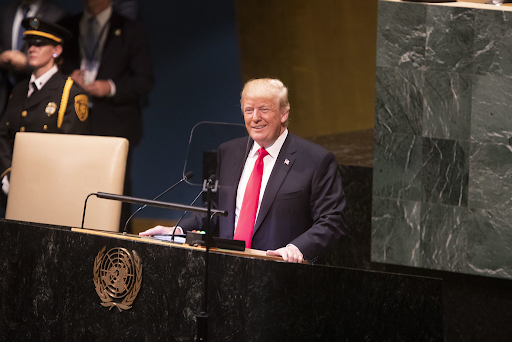
President Donald Trump transformed the UN General Assembly podium from a stage for multilateral diplomacy into a unilateral pulpit, using his address to issue demands and condemnations rather than to build consensus. His treatment of India was a prime example of this approach, showcasing a disdain for the collaborative spirit the UN is meant to embody.
The traditional purpose of a UNGA speech is to outline a country’s vision for the world and to find common ground on global challenges. Trump, however, used his time to single out a strategic partner, India, and publicly demand it change its policies. His accusation that India is funding the Ukraine war was not an invitation to dialogue but a verdict delivered from on high.
His proposed solution was equally unilateral: the imposition of “powerful tariffs.” He did not speak of collective security measures or negotiated settlements but of economic force wielded by the United States to compel obedience. He urged other nations to follow his lead, but the message was clear—the US will act alone if necessary.
Even his mention of the India-Pakistan issue was framed unilaterally. It was not a call for renewed peace talks or a celebration of regional diplomacy, but a self-congratulatory claim about his own singular, decisive intervention, a narrative that dismisses the agency of the countries involved.
This approach fundamentally misuses the UN platform. Instead of fostering cooperation, it creates division and resentment. For India and other nations watching, the speech was a clear signal that under Trump, the UN is not a forum for equals but a venue for the world’s most powerful nation to issue its decrees.