
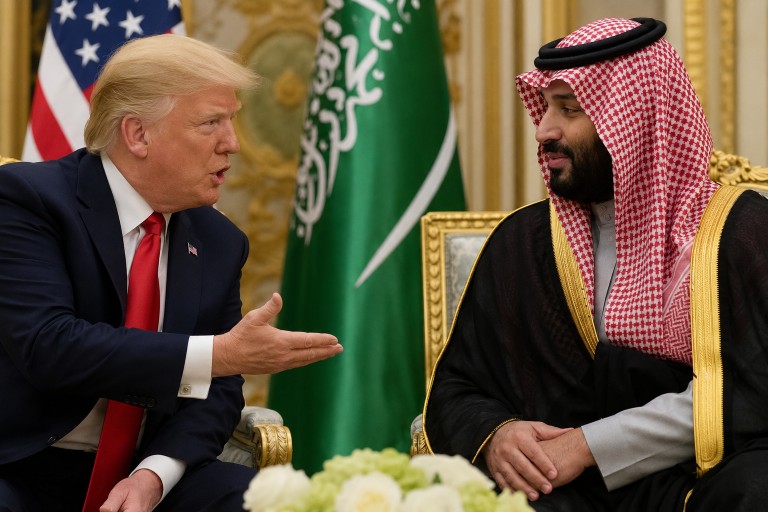
The United States and Saudi Arabia have taken a pivotal step in bolstering their energy and strategic partnership by signing a landmark civil nuclear cooperation agreement. This significant accord was formalized with the signatures of US Energy Secretary Chris Wright and Saudi Energy Minister Prince Abdulaziz bin Salman. It establishes a framework for peaceful nuclear cooperation and includes a bilateral safeguards agreement aimed at ensuring compliance with international standards.
The specifics of the agreement remain under wraps, but there is potential for Saudi Arabia to develop its own uranium enrichment capabilities in the future, pending further approvals and oversight. The deal will be submitted to the US Congress for review, where legislators will scrutinize its nonproliferation safeguards and monitoring measures. This development comes after years of discussions aimed at enhancing American nuclear technology exports, creating jobs, and strengthening the strategic alliance between Washington and Riyadh.
Saudi Arabia has long expressed its intention to diversify its energy sources by including nuclear power alongside renewable energy. The kingdom has indicated that it would have pursued nuclear technology partnerships with other nations if an agreement with the United States had not materialized. This move highlights Riyadh’s commitment to expanding its energy mix and reducing reliance on fossil fuels.
The US administration has underscored that the agreement adheres to international nuclear safety and nonproliferation standards, which also serves to maintain American leadership in the global civilian nuclear energy sector. However, the announcement has not been without controversy. Concerns have been raised by some lawmakers and nonproliferation experts who warn about the implications of future uranium enrichment capabilities in Saudi Arabia and emphasize the necessity for stringent international oversight.