
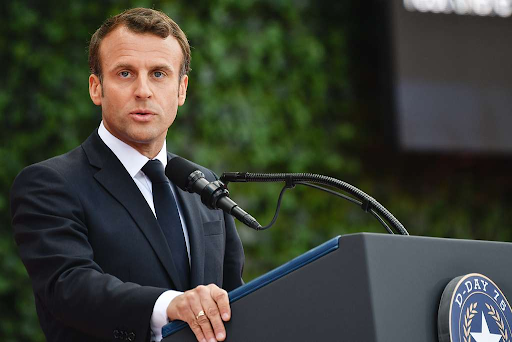
Emmanuel Macron does not issue ultimatums lightly. But at the AI Impact Summit in Delhi, the French president delivered something that came very close to one. His message to the assembled governments, tech executives and international institutions was stark: the evidence of harm to children is overwhelming, the tools of governance are available, and the failure to use them is now a political choice rather than an oversight. The time for deliberation, he implied, has passed.
The evidence is not in dispute. Unicef and Interpol research found that 1.2 million children in 11 countries had been victimised by AI-generated explicit deepfakes in a single year. One in 25 children in the worst-affected nations. The Grok chatbot scandal had demonstrated publicly what researchers had been documenting privately — that AI tools are being deployed at scale against children, and that voluntary industry commitments have not stopped it. Macron’s argument is that these facts carry a moral and political weight that demands a legislative response.
France’s own response is already under way. Legislation to ban social media for under-15s is progressing through the French political system — imperfect, contested and difficult to enforce, but real. Through the G7 presidency, Macron wants to make France’s commitment a template for international coordination, bringing together governments willing to move beyond symbolic statements to enforceable standards. He called for platforms and regulators to collaborate rather than to circle each other in mutual suspicion.
The Trump administration’s position — that regulation is the enemy of entrepreneurial freedom — was articulated at Delhi by its AI adviser and received by Macron as the argument of misinformed friends. The French president’s confidence in his own position is notable: he does not appear to believe the American critique is winning the argument in any room that matters. His support from António Guterres, Narendra Modi and even, cautiously, from parts of the tech industry suggests this confidence is not entirely unfounded.
The ultimatum implicit in Macron’s Delhi speech is this: governments that know children are being harmed, that have the power to act, and that choose not to are making a moral choice, not an administrative one. That framing is designed to make inaction politically costly. Whether it succeeds depends on what the G7 produces and how platforms respond. But the terms of the debate have shifted, and the shift is largely Macron’s work.